
Pancreatic cancer can develop from two kinds of cells in the pancreas: exocrine cells and neuroendocrine cells, such as islet cells. The exocrine type is more common and is usually found at an advanced stage. Pancreatic neuroendocrine tumors (islet cell tumors) are less common but have a better prognosis. Explore the links on this page to learn more about pancreatic cancer treatment, statistics, research, and clinical trials.
Cancer prevention is action taken to lower the chance of getting cancer. In 2025, about 2 million people will be diagnosed with cancer in the United States. In addition to the physical problems and emotional distress caused by cancer, the high costs of care are also a burden to patients, their families, and to the public. By preventing cancer, the number of new cases of cancer is lowered. Hopefully, this will reduce the burden of cancer and lower the number of deaths caused by cancer.
Cancer is not a single disease but a group of related diseases. Many things in our genes, our lifestyle, and the environment around us may increase or decrease our risk of getting cancer.
Scientists are studying many different ways to help prevent cancer, including:
Carcinogenesis is the series of steps that take place as a normal cell becomes a cancer cell. Cells are the smallest units of the body and they make up the body's tissues. Each cell contains genes that guide the way the body grows, develops, and repairs itself. There are many genes that control whether a cell lives or dies, divides (multiplies), or takes on special functions, such as becoming a nerve cell or a muscle cell.
Changes (mutations) in genes can cause normal controls in cells to break down. When this happens, cells do not die when they should and new cells are produced when the body does not need them. The buildup of extra cells may cause a mass (tumor) to form.
Tumors can be benign or malignant (cancerous). Malignant tumor cells invade nearby tissues and spread to other parts of the body. Benign tumor cells do not invade nearby tissues or spread.
Scientists study risk factors and protective factors to find ways to prevent new cancers from starting. Anything that increases your chance of developing cancer is called a cancer risk factor; anything that decreases your chance of developing cancer is called a cancer protective factor.
Some risk factors for cancer can be avoided, but many cannot. For example, both smoking and inheriting certain genes are risk factors for some types of cancer, but only smoking can be avoided. Risk factors that a person can control are called modifiable risk factors.
Many other factors in our environment, diet, and lifestyle may cause or prevent cancer. This summary reviews only the major cancer risk factors and protective factors that can be controlled or changed to reduce the risk of cancer. Risk factors that are not described in the summary include certain sexual behaviors, the use of estrogen, and being exposed to certain substances at work or to certain chemicals.
Tobacco use is strongly linked to an increased risk for many kinds of cancer. Smoking cigarettes is the leading cause of the following types of cancer:
Not smoking or quitting smoking lowers the risk of getting cancer and dying from cancer. Scientists believe that cigarette smoking causes about 30% of all cancer deaths in the United States.
To learn more, visit the following PDQ summaries:
Certain viruses and bacteria are able to cause cancer. Examples of cancer-causing viruses and bacteria include:
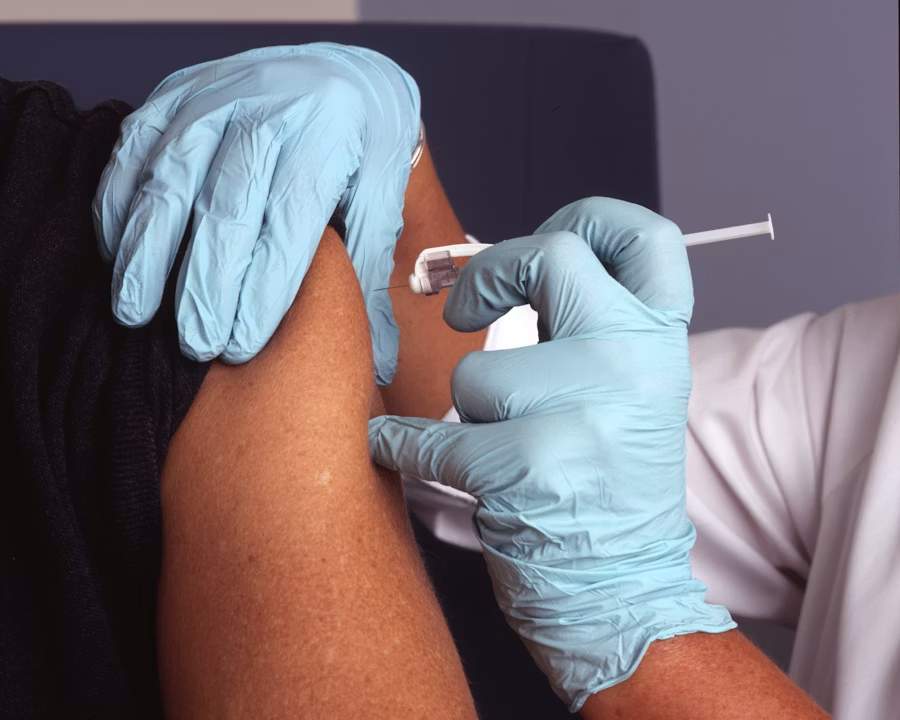
Two vaccines to prevent infection by cancer-causing agents have been developed and approved by the U.S. Food and Drug Administration (FDA). One is a vaccine to prevent infection with hepatitis B virus. The other protects against infection with strains of HPV that cause cervical cancer. Scientists continue to work on vaccines against infections that cause cancer.
To learn more, visit the following PDQ summaries:
Immunosuppressive medicines are used after an organ transplant. These medicines stop a transplanted organ from being rejected by decreasing the body's immune response. Immunosuppressive medicines are linked to an increased risk of cancer because they lower the body's ability to keep cancer from forming. The risk of cancer, especially cancer caused by a virus, is higher in the first 6 months after organ transplant, but the risk lasts for many years.
The foods that you eat on a regular basis make up your diet. Diet is being studied as a risk factor for cancer. It is hard to study the effects of diet on cancer because a person's diet includes foods that may protect against cancer and foods that may increase the risk of cancer.
It is also hard for people who take part in the studies to keep track of what they eat over a long period of time. This may explain why studies have different results about how diet affects the risk of cancer.
Some studies have shown that a diet high in fat, proteins, calories, and red meat increases the risk of colorectal cancer, but other studies have not shown this.
It is not known if a diet low in fat and high in fiber, fruits, and vegetables lowers the risk of colorectal cancer.
Studies have shown that drinking alcohol is linked to an increased risk of the following types of cancers:
Drinking alcohol may also increase the risk of liver cancer and female colorectal cancer.
To learn more, visit the following PDQ summaries:
Studies show that people who are physically active have a lower risk of certain cancers than those who are not. It is not known if physical activity itself is the reason for this.
Some studies show that physical activity protects against postmenopausal breast cancer and endometrial cancer.
To learn more, visit the following PDQ summaries:
Studies show that obesity is linked to a higher risk of the following types of cancer:
Some studies show that obesity is also a risk factor for gallbladder cancer and liver cancer.
Studies have shown that people who lose weight decrease their risk of these cancers.
To learn more, visit the following PDQ summaries:
Some studies show that diabetes may slightly increase the risk of having the following types of cancer:
Diabetes and cancer share some of the same risk factors. These risk factors include:
Because diabetes and cancer share these risk factors, it is hard to know whether the risk of cancer is increased more by diabetes or by these risk factors.
Studies are being done to see how medicine that is used to treat diabetes affects cancer risk.
Being exposed to chemicals and other substances in the environment has been linked to some cancers:
Studies have been done to see if pesticides and other pollutants increase the risk of cancer. The results of those studies have been unclear because other factors can change the results of the studies.
An intervention is a treatment or action taken to prevent or treat disease, or improve health in other ways. Many studies are being done to find ways to keep cancer from starting or coming back.
Chemoprevention is the use of substances to lower the risk of cancer, or keep it from recurring. The substances may be natural or made in the laboratory. Some chemopreventive agents are tested in people who are at high risk for a certain type of cancer. The risk may be because of a precancerous condition, family history, or lifestyle factors.
Taking one of the following agents may lower the risk of cancer:
Weight loss surgery, also called bariatric surgery, is a procedure that people with obesity can have to lose weight and improve their overall health and quality of life. The surgery changes the anatomy of the stomach or changes the way the body absorbs nutrients. A person who undergoes this procedure will lose a lot of weight and as a result, will have a decreased risk of cancers linked to overweight.
To learn more about cancer prevention, visit the NCI website.
People with changes in the BRCA1 or BRCA2 gene, a personal or family history of cancer, inherited syndromes, and other high risk factors may want to have surgery to lower their risk. It's important to have a cancer risk assessment and counseling before making this decision. The following surgeries could help lower your risk of getting certain types of cancer:
Aspirin has been studied as chemoprevention. The studies show mixed results but most have shown that aspirin does not prevent cancer. However, there is evidence that taking aspirin for long periods of time may prevent colorectal cancer in certain people. Learn more at Colorectal Cancer Prevention.
Results from a randomized trial suggest that taking aspirin may make cancer grow more quickly in the elderly, but longer follow up is needed to confirm these results.
Bleeding in the gastrointestinal tract or brain is a side effect of aspirin. Even though aspirin has not been shown to reduce the risk of most cancers, it has many uses, including helping to lower the chances of dying from heart disease. Before beginning long-term aspirin use, it is important to talk with your doctor about the related benefits and harms.
An intervention is a treatment or action taken to prevent or treat disease, or improve health in other ways.
There is not enough proof that taking multivitamin and mineral supplements or single vitamins or minerals can prevent cancer. The following vitamins and mineral supplements have been studied, but have not been shown to lower the risk of cancer:
The Selenium and Vitamin E Cancer Prevention Trial (SELECT) found that vitamin E taken alone increased the risk of prostate cancer. The risk continued even after the men stopped taking vitamin E. Taking selenium with vitamin E or taking selenium alone did not increase the risk of prostate cancer.
Vitamin D has also been studied to see if it has anticancer effects. Skin exposed to sunshine can make vitamin D. Vitamin D can also be consumed in the diet and in dietary supplements. Taking vitamin D in doses from 400–1100 IU/day has not been shown to lower or increase the risk of cancer.
The VITamin D and OmegA-3 TriaL (VITAL) is under way to study whether taking vitamin D (2000 IU/day) and omega-3 fatty acids from marine (oily fish) sources lowers the risk of cancer.
The Physicians' Health Study found that men who have had cancer in the past and take a multivitamin daily may have a slightly lower risk of having a second cancer.
To learn more, visit the following PDQ summaries:
Information about clinical trials supported by NCI can be found on NCI’s clinical trials search webpage. Clinical trials supported by other organizations can be found on the ClinicalTrials.gov website.





Address: P.O. Box 66802, Phoenix, AZ, 85082, USA
Need Support?
(555) 123-4567
info@cancerloop.com