

Kidney cancer can develop in adults and children. The main types of kidney cancer are renal cell cancer, transitional cell cancer, and Wilms tumor. Certain inherited conditions increase the risk of kidney cancer. Explore the links on this page to learn more about kidney cancer treatment, statistics, research, and clinical trials.
Cancer prevention is action taken to lower the chance of getting cancer. In 2025, about 2 million people will be diagnosed with cancer in the United States. In addition to the physical problems and emotional distress caused by cancer, the high costs of care are also a burden to patients, their families, and to the public. By preventing cancer, the number of new cases of cancer is lowered. Hopefully, this will reduce the burden of cancer and lower the number of deaths caused by cancer.
Cancer is not a single disease but a group of related diseases. Many things in our genes, our lifestyle, and the environment around us may increase or decrease our risk of getting cancer.
Scientists are studying many different ways to help prevent cancer, including:
Carcinogenesis is the series of steps that take place as a normal cell becomes a cancer cell. Cells are the smallest units of the body and they make up the body's tissues. Each cell contains genes that guide the way the body grows, develops, and repairs itself. There are many genes that control whether a cell lives or dies, divides (multiplies), or takes on special functions, such as becoming a nerve cell or a muscle cell.
Changes (mutations) in genes can cause normal controls in cells to break down. When this happens, cells do not die when they should and new cells are produced when the body does not need them. The buildup of extra cells may cause a mass (tumor) to form.
Tumors can be benign or malignant (cancerous). Malignant tumor cells invade nearby tissues and spread to other parts of the body. Benign tumor cells do not invade nearby tissues or spread.
Scientists study risk factors and protective factors to find ways to prevent new cancers from starting. Anything that increases your chance of developing cancer is called a cancer risk factor; anything that decreases your chance of developing cancer is called a cancer protective factor.
Some risk factors for cancer can be avoided, but many cannot. For example, both smoking and inheriting certain genes are risk factors for some types of cancer, but only smoking can be avoided. Risk factors that a person can control are called modifiable risk factors.
Many other factors in our environment, diet, and lifestyle may cause or prevent cancer. This summary reviews only the major cancer risk factors and protective factors that can be controlled or changed to reduce the risk of cancer. Risk factors that are not described in the summary include certain sexual behaviors, the use of estrogen, and being exposed to certain substances at work or to certain chemicals.
Tobacco use is strongly linked to an increased risk for many kinds of cancer. Smoking cigarettes is the leading cause of the following types of cancer:
Not smoking or quitting smoking lowers the risk of getting cancer and dying from cancer. Scientists believe that cigarette smoking causes about 30% of all cancer deaths in the United States.
To learn more, visit the following PDQ summaries:
Certain viruses and bacteria are able to cause cancer. Examples of cancer-causing viruses and bacteria include:
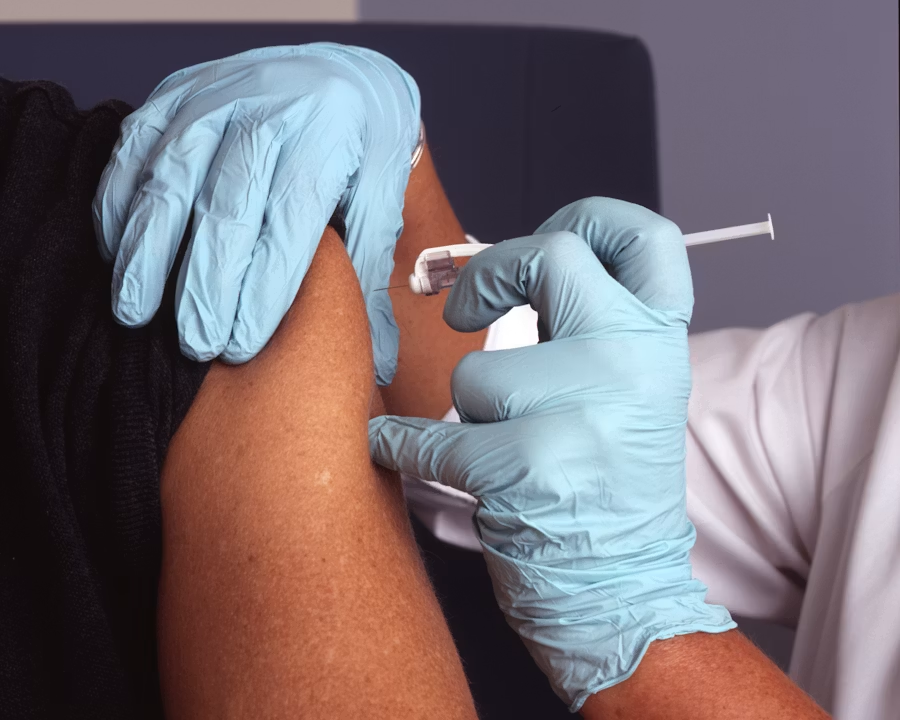
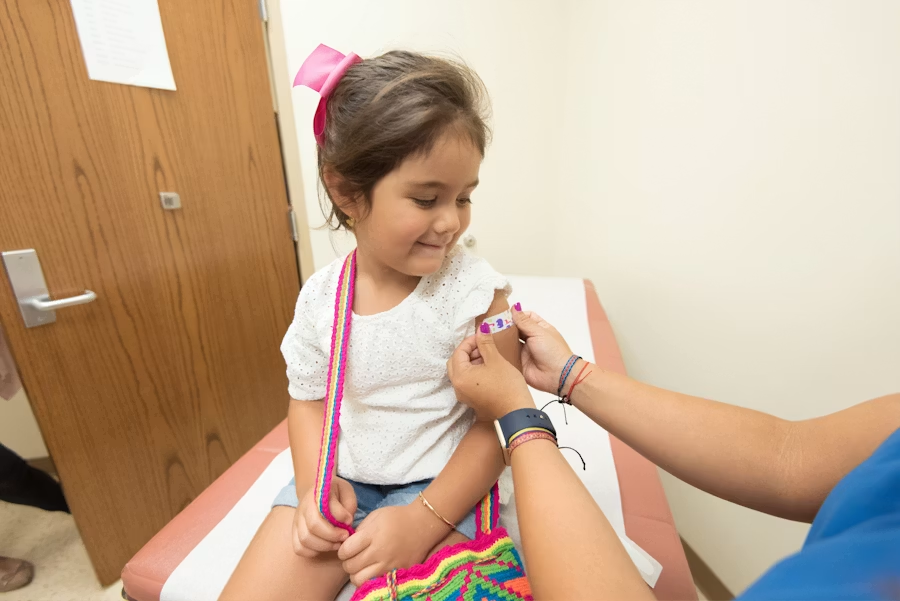
Two vaccines to prevent infection by cancer-causing agents have been developed and approved by the U.S. Food and Drug Administration (FDA). One is a vaccine to prevent infection with hepatitis B virus. The other protects against infection with strains of HPV that cause cervical cancer. Scientists continue to work on vaccines against infections that cause cancer.
To learn more, visit the following PDQ summaries:
Being exposed to radiation is a known cause of cancer. There are two main types of radiation linked with an increased risk of cancer:
Scientists believe that ionizing radiation causes leukemia, thyroid cancer, and breast cancer in women. Ionizing radiation may also be linked to myeloma and cancers of the lung, stomach, colon, esophagus, bladder, and ovary. Being exposed to radiation from diagnostic x-rays increases the risk of cancer in patients and x-ray technicians. Diagnostic radiation in children and adolescents has been linked with a higher risk of cancers at a young age.
The growing use of CT scans over the last 20 years has increased exposure to ionizing radiation. The risk of cancer also increases with the number of CT scans a patient has and the radiation dose used each time.



Address: P.O. Box 66802, Phoenix, AZ, 85082, USA
Need Support?
(555) 123-4567
info@cancerloop.com